
How Screen Time Is Transforming Classroom Learning in 2026
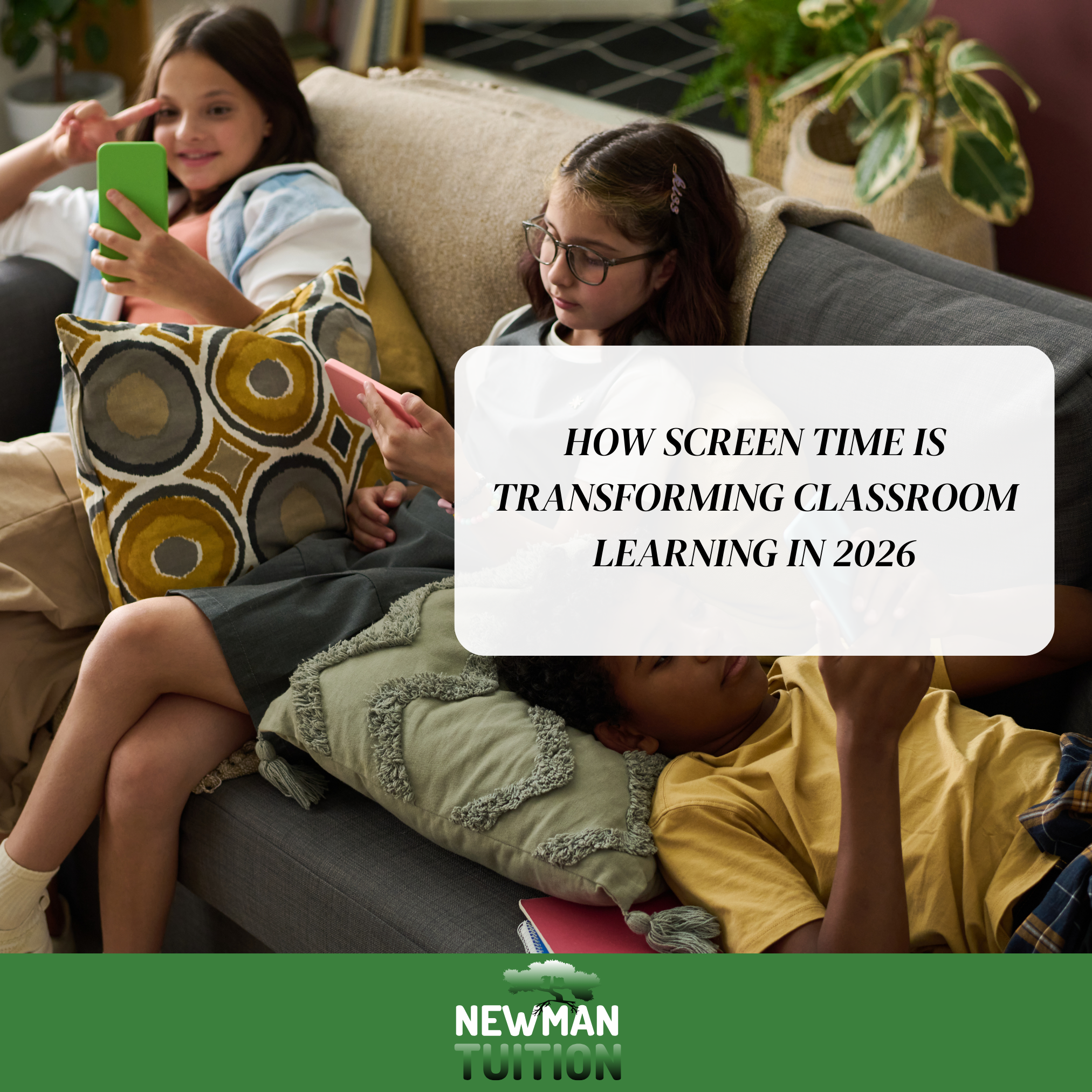
In 2026, screen time is no longer a side conversation in education — it is central to how pupils learn, revise and engage in the classroom. From interactive whiteboards and AI-powered learning platforms to tablets replacing exercise books, digital tools are now woven into daily school life.
At Newman Tuition, we regularly see the effects of this shift — both the advantages and the challenges — in the students we support.
So how exactly is screen time transforming classroom learning, and what does it mean for pupils and parents?
The Rise of the Fully Digital Classroom
In many UK schools, traditional textbooks are being phased out in favour of:
- Online homework platforms
- AI-driven revision tools
- Digital assessments
- Interactive simulations
- Recorded lessons for on-demand learning
Lessons are increasingly delivered through screens, with pupils expected to research, complete tasks and even collaborate digitally.
This has brought undeniable benefits — but also new concerns.
The Benefits of Screen-Based Learning
1. Personalised Learning Pathways
Technology now allows lessons to adapt in real time. Many platforms adjust difficulty levels based on a pupil’s answers, offering immediate feedback and targeted practice.
For high-achieving students, this prevents boredom. For those who need extra support, it offers reinforcement without embarrassment.
2. Greater Accessibility
Recorded lessons, subtitles, speech-to-text tools and digital resources have made learning more accessible for pupils with additional needs. Students can revisit tricky concepts at their own pace — something that isn’t always possible in a fast-moving classroom.
3. Broader Access to Resources
Instead of relying on a single textbook, pupils can now access:
- Educational videos
- Interactive quizzes
- Virtual science simulations
- Past papers instantly
When used correctly, this variety can deepen understanding and engagement.
The Hidden Challenges of Increased Screen Time
While technology offers exciting opportunities, it also brings challenges that many schools are still navigating.
1. Reduced Attention Spans
Many teachers report that pupils are finding it harder to concentrate for sustained periods. When learning takes place on the same device used for entertainment, the temptation to multitask increases.
Students accustomed to fast-paced digital content can struggle with:
- Extended reading tasks
- Complex problem-solving
- Deep, focused revision
2. Surface Learning vs Deep Understanding
Digital platforms often promote quick responses and immediate feedback. While this can build confidence, it sometimes encourages “click-through” learning rather than deep thinking.
True academic success — especially for GCSEs and A-Levels — still requires:
- Extended writing
- Structured reasoning
- Exam technique
- Independent critical thinking
These skills cannot be developed through multiple-choice quizzes alone.
3. Screen Fatigue
By 2026, many pupils spend:
- 6 hours at school on devices
- Additional hours on homework platforms
- Even more time on social media and entertainment
This level of exposure can lead to tiredness, reduced focus and difficulty switching off.
The Changing Role of Teachers
Technology has not replaced teachers — but it has changed their role.
Teachers are now:
- Facilitators of discussion rather than sole information providers
- Guides through digital content
- Managers of classroom device use
- Interpreters of data generated by learning platforms
However, the human element remains essential. Encouragement, explanation, reassurance and tailored guidance cannot be automated.
What This Means for Parents
For parents, the question is no longer whether children use screens — it’s how they use them.
Key considerations include:
- Are they actively learning or passively scrolling?
- Can they focus without constant digital stimulation?
- Are they balancing online study with offline revision?
Encouraging a mix of digital and traditional study methods can be powerful. Handwritten notes, printed past papers and verbal explanation of concepts all strengthen memory retention.
Where Tuition Makes a Difference
At Newman Tuition, we see firsthand that students benefit from structured, distraction-free learning environments.
While we embrace helpful technology, our approach prioritises:
- Clear explanation
- Exam technique
- Focused, guided practice
- Building confidence without digital overload
Many pupils thrive when they step away from constant screen-based learning and engage in direct academic discussion.
In 2026, success isn’t about rejecting technology — it’s about using it wisely.
Finding the Right Balance
Screen time is transforming education in profound ways. It offers flexibility, accessibility and innovation. But it also requires boundaries, structure and human guidance.
The most successful students are not necessarily those who use the most technology — but those who know when to switch it off.
If your child is struggling with focus, exam technique or confidence in this increasingly digital landscape, personalised support can make all the difference.
At Newman Tuition, we help students develop the discipline, clarity and academic skills they need to succeed — both online and beyond the screen.