
Why Reading for Pleasure Is So Important for Children’s Academic Development
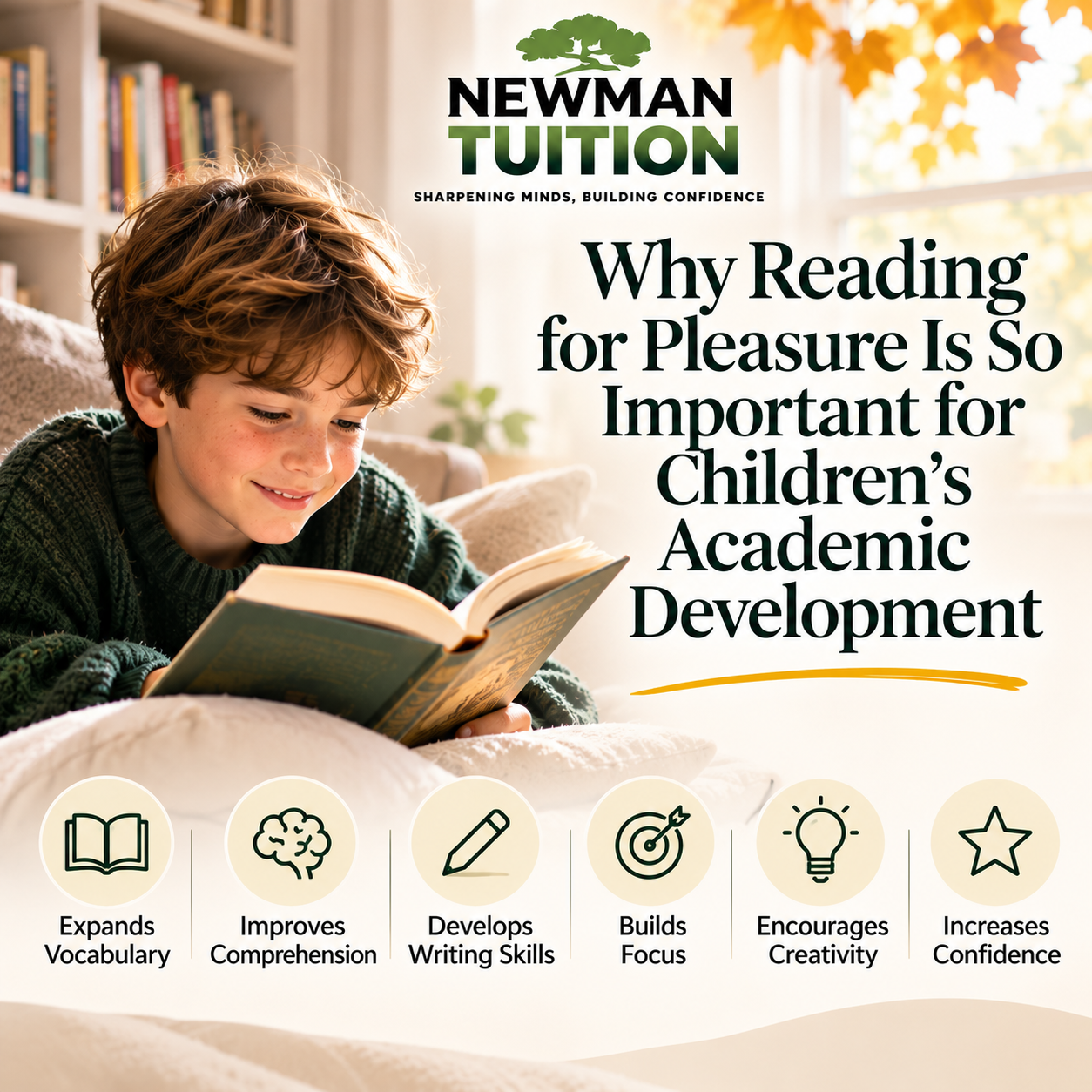
Reading is often seen as something children do for school, whether that’s completing their weekly reading homework, studying a set text or preparing for an English assessment. However, reading for pleasure can be just as important as the reading children do in the classroom.
Developing a genuine enjoyment of reading can have a lasting impact on a child’s academic development. From improving vocabulary and comprehension to strengthening concentration, writing skills and critical thinking, regular reading offers benefits that extend far beyond English lessons.
But why is reading for pleasure so important, and how can parents encourage children to make it part of their everyday routine?
1. It Builds Vocabulary and Language Skills
One of the biggest benefits of reading regularly is the opportunity for children to develop their vocabulary naturally.
Books introduce children to words, expressions and sentence structures they might not encounter in everyday conversations. Over time, this exposure helps them understand how language works and how different words can be used in different contexts.
A stronger vocabulary can benefit children across the curriculum, helping them understand questions, communicate their ideas and express themselves more confidently in written work.
For older students, particularly those preparing for GCSEs, having a broad vocabulary can also support essay writing, textual analysis and the ability to construct well-developed arguments.
2. It Improves Reading Comprehension
Being able to read words on a page is one thing; understanding their meaning is another.
Reading for pleasure encourages children to follow storylines, recognise important details, understand characters’ motivations and make connections between different parts of a text.
These skills help develop reading comprehension, which is essential across almost every school subject.
In subjects such as English, history, geography and science, students regularly need to interpret information, understand written instructions and identify key points.
The more children practise reading and understanding different types of text, the more confident they can become when approaching unfamiliar material in school.
3. It Strengthens Writing Skills
Children who read regularly are continually exposed to examples of good writing.
They begin to recognise how authors structure sentences, introduce ideas, build descriptions and create engaging narratives. Without necessarily realising it, they absorb these techniques and can begin applying them to their own writing.
Regular reading can help children develop:
- More varied vocabulary and sentence structures.
- Better spelling and punctuation awareness.
- Improved grammar and sentence flow.
- Stronger creative writing skills.
- Greater confidence when expressing ideas.
This is particularly valuable as children progress through school and are expected to produce more detailed, structured and analytical written responses.
4. It Develops Concentration and Focus
In a world filled with screens, notifications and constant distractions, encouraging children to spend time reading can help them develop their ability to concentrate.
Reading a book requires children to focus on one activity, follow information over time and remember details as they progress through a story.
Building this habit can support their ability to concentrate during lessons, complete homework and approach longer tasks without becoming distracted.
For children who find it difficult to settle into independent learning, starting with just 10–15 minutes of enjoyable reading each day can be a manageable way to build consistency.
5. It Encourages Critical Thinking and Imagination
Reading is not simply about following a story. It also encourages children to think, question and interpret information.
As children read, they begin to consider why characters behave in certain ways, predict what might happen next and form opinions about what they have read.
These activities help develop critical thinking skills, encouraging children to look beyond the words on the page and consider different perspectives.
This ability to analyse information and form independent opinions is particularly important as students move into secondary education, where subjects increasingly require interpretation, evaluation and reasoned arguments.
6. It Can Improve Confidence and Academic Independence
Children who enjoy reading often become more comfortable engaging with written information.
Whether they are reading independently, researching a topic or tackling a challenging exam question, familiarity with different types of text can help them approach learning with greater confidence.
Reading also gives children the opportunity to explore subjects that interest them independently. From science and history to sport, animals and adventure, books can introduce new interests and encourage curiosity beyond the classroom.
Developing this sense of independence can be particularly beneficial as children progress towards GCSEs and begin taking greater responsibility for their own learning.
How Can Parents Encourage a Love of Reading?
Not every child naturally enjoys sitting down with a book, and that’s perfectly normal. The key is to make reading feel enjoyable rather than another school-related responsibility.
Here are a few practical ways parents can help:
Let children choose what they read
Allowing children to select books based on their own interests can make reading feel much more appealing. It doesn’t always have to be a traditional novel. Comics, magazines, biographies and non-fiction books all count.
Create a regular reading routine
Try introducing a short period of reading into your child’s daily routine. This could be before bed, after school or during a quiet part of the weekend.
Make reading part of family life
Children are more likely to develop positive habits when they see adults enjoying books too. Reading together, discussing stories or sharing recommendations can help make reading a natural part of everyday life.
Visit your local library or bookshop
Giving children the opportunity to explore different books can help them discover new authors and subjects they might not have considered before.
Talk about what they are reading
Ask questions about their books, favourite characters or interesting facts they have discovered. This encourages comprehension and helps children develop the confidence to explain their thoughts and opinions.
Avoid turning reading into a chore
The aim is to build enjoyment. If a child isn’t interested in a particular book, encourage them to try something different rather than forcing them to finish it.
Does Reading for Pleasure Help with GCSE Preparation?
Absolutely. Although reading for pleasure is not a replacement for structured revision or studying the GCSE curriculum, it can help students develop many of the skills they need to succeed academically.
For GCSE English Language and Literature, regular reading can support vocabulary development, comprehension, interpretation and the ability to analyse written texts.
For other subjects, it can help students become more comfortable understanding complex questions, processing information and constructing written answers.
Students who regularly engage with reading may also find it easier to approach unfamiliar texts and develop their own ideas when answering exam questions.
These skills take time to develop, which is why encouraging reading habits from an early age can make a meaningful difference as children progress through school.
Supporting Your Child’s Academic Development with Newman Tuition
Every child develops their reading and learning skills at a different pace. While reading for pleasure can provide a fantastic foundation, some children may benefit from additional support to strengthen their comprehension, vocabulary, writing and wider academic confidence.
At Newman Tuition, we understand the importance of building strong foundations and helping students develop the skills they need to feel