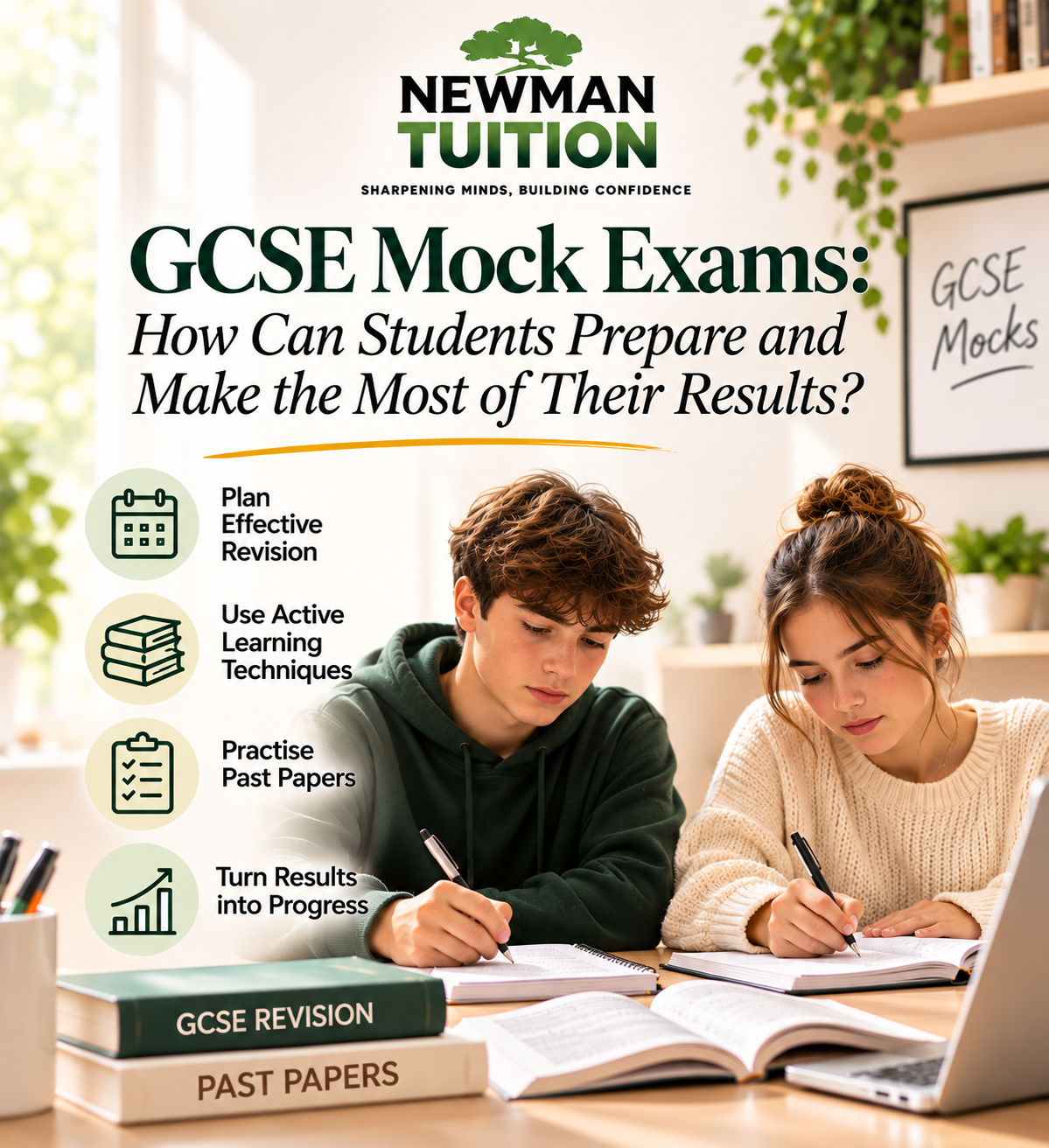
GCSE Mock Exams: How Can Students Prepare and Make the Most of Their Results?
For many students, GCSE mock exams are one of the most important milestones of Year 11. They provide an opportunity to experience exam conditions, test knowledge and identify areas that may need more attention before the final GCSE examinations.
However, mock exams can also feel overwhelming. With several subjects to revise, growing expectations and the pressure of achieving good grades, knowing where to start isn’t always easy.
The good news is that mock exams are not just about the grades students receive. They are an opportunity to learn, improve and develop the skills needed to approach the final examinations with confidence.
So, how can students prepare effectively for GCSE mock exams, and what should they do with their results afterwards?
1. Start Revising Early and Create a Realistic Timetable
One of the biggest mistakes students make is leaving revision until the last minute. Trying to cover several subjects in a short period can lead to unnecessary stress and make it harder to retain information.
Creating a realistic revision timetable helps students organise their workload and ensures that each subject receives enough attention.
When planning a revision timetable:
- Prioritise subjects where confidence is lower.
- Break larger topics into smaller, manageable sections.
- Schedule regular revision sessions rather than attempting everything at once.
- Include short breaks to maintain concentration.
- Allow time to revisit topics already covered.
A consistent revision routine is much more effective than trying to learn everything in one evening.
2. Use Effective GCSE Revision Techniques
Simply reading through textbooks or highlighting notes isn’t always the most effective way to revise. Students should experiment with different techniques to find what works best for their learning style.
Some useful GCSE revision techniques include:
Active Recall: Test your memory by answering questions without looking at your notes. This encourages you to retrieve information rather than simply recognise it.
Past Exam Papers: Practise answering questions from previous exam papers to become familiar with the format, wording and expectations of GCSE examinations.
Flashcards: Create short question-and-answer cards to help remember key facts, definitions, formulas and important information.
Mind Maps: Organise information visually to understand how different topics and concepts connect.
Practice Questions: Regularly answer questions on individual topics to identify gaps in your knowledge.
The key is to make revision active. Students should regularly test what they know rather than simply rereading information.
3. Understand the Importance of Exam Technique
Knowing the subject content is important, but understanding how to answer exam questions is equally essential.
Students can lose marks even when they understand a topic if they don’t fully address what the question is asking.
Good exam technique includes:
- Reading each question carefully before answering.
- Paying attention to command words such as explain, describe, compare and evaluate.
- Checking how many marks are available for each question.
- Showing working out in mathematical questions.
- Managing time effectively throughout the paper.
- Leaving enough time to review answers.
Practising under timed conditions can help students become more comfortable with the pressure of an examination and improve their ability to complete papers within the allocated time.
4. Learn How to Manage Exam Stress and Nerves
Feeling nervous before an exam is completely normal. However, too much stress can affect concentration, memory and confidence.
Students should remember that mock exams are designed to help them prepare for the real thing. They are an opportunity to make mistakes, learn from them and understand what needs improving.
A few simple ways to manage exam stress include:
- Getting enough sleep in the days leading up to exams.
- Taking regular breaks during revision.
- Eating properly and staying hydrated.
- Avoiding last-minute cramming.
- Talking to parents, teachers or tutors if feeling overwhelmed.
- Remembering that one examination does not define academic ability.
Building healthy study habits can make a significant difference to how students approach their exams.
5. Don’t Just Look at the Grade: Understand Your Mock Exam Results
Once mock exams are finished, it can be tempting to focus entirely on the grades achieved. However, the most valuable part of the process is understanding what those results reveal.
Mock exam results can help students identify:
- Subjects where they are performing well.
- Topics they haven’t fully understood.
- Questions where marks were lost unnecessarily.
- Whether time management affected their performance.
- Areas where exam technique needs improvement.
For example, a student may achieve a lower-than-expected Maths grade not because they don’t understand the subject, but because they struggle with applying their knowledge to longer exam questions.
Understanding the reason behind a result allows students to focus their efforts more effectively.
6. Turn Mock Exam Results Into an Action Plan
The period following mock exams is an excellent opportunity to make meaningful improvements before the final GCSE examinations.
Rather than simply moving on to the next topic, students should review their feedback and create a targeted improvement plan.
A simple approach is to:
- Review each mock exam paper and teacher feedback.
- Identify the topics where the most marks were lost.
- Separate knowledge gaps from exam technique issues.
- Prioritise the areas that need the most attention.
- Set realistic weekly targets.
- Revisit difficult topics and complete additional practice questions.
Students should also speak to their teachers about any areas they are unsure about. Addressing difficulties early can prevent small knowledge gaps from becoming bigger problems later in the academic year.
7. When Should Students Consider Additional GCSE Tuition?
Some students benefit from additional support during their GCSE preparation, particularly if they are struggling with specific subjects, finding revision difficult or lacking confidence.
One-to-one tuition can provide a more focused learning experience, allowing tutors to identify individual weaknesses and adapt lessons around the student’s needs.
Additional GCSE tuition can help students:
- Strengthen their understanding of challenging topics.
- Build confidence in subjects they find difficult.
- Develop effective revision strategies.
- Practise exam questions and improve exam technique.
- Work towards their individual academic goals.
The earlier students address areas of difficulty, the more time they have to make progress before their final examinations.
Making the Most of GCSE Mock Exams
GCSE mock exams should be seen as a valuable learning experience rather than simply another set of examinations.
They help students understand what to expect, recognise areas for improvement and develop the confidence needed for their final GCSEs.
With a structured revision timetable, effective study techniques and the right support, students can use their mock exam experience to make meaningful progress.
At Newman Tuition, we understand that every student learns differently. Our tutoring support is designed to help students strengthen their subject knowledge, develop confidence and work towards achieving their academic potential.
Looking for additional GCSE support? Get in touch with Newman Tuition to find out how our tutors can help your child prepare for their GCSE examinations.