
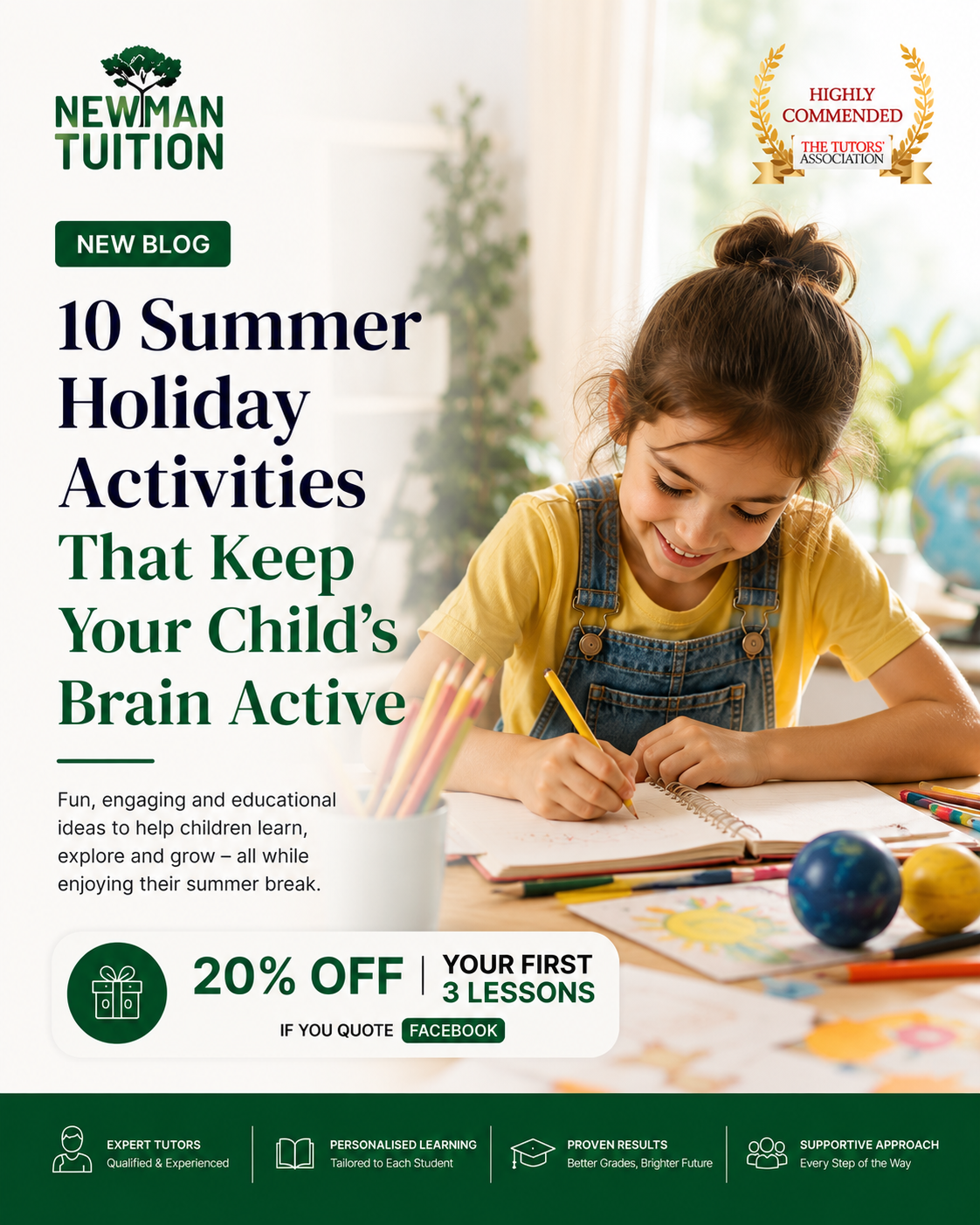
10 Summer Holiday Activities That Keep Your Child’s Brain Active
The summer holidays are a time for adventure, relaxation and making memories as a family. While children deserve a break from homework and school routines, six weeks away from learning can sometimes lead to what’s known as the “summer learning slide” – where children forget some of the knowledge and skills they’ve worked so hard to develop during the school year.
The good news? Keeping your child’s brain active doesn’t have to feel like school.
By weaving learning into everyday activities, you can help your child stay curious, confident and ready for the new academic year, all while having plenty of fun.
Here are ten simple summer holiday activities that encourage learning without children even realising it.
1. Visit Your Local Library
Libraries are one of the best free resources available during the holidays. Let your child choose books based on their interests, whether that’s dinosaurs, football, fantasy or science.
Reading regularly helps to improve:
- Vocabulary
- Comprehension
- Imagination
- Writing skills
- Confidence
Allowing children to choose what they read often increases motivation and makes reading feel enjoyable rather than a chore.
2. Cook Together
Cooking is packed with hidden learning opportunities.
Following recipes helps children practise:
- Reading instructions
- Measuring ingredients
- Fractions
- Timing
- Problem-solving
Younger children can count ingredients, while older children can double recipes or calculate measurements.
Best of all, everyone gets something delicious at the end.
3. Turn Walks Into Learning Adventures
A simple walk around your local area can become an educational treasure hunt.
Challenge your child to:
- Identify different plants or birds
- Count colours, shapes or numbers
- Read road signs
- Estimate distances
- Spot patterns in nature
Fresh air, exercise and observation all help develop concentration and curiosity.
4. Try Science Experiments at Home
Children naturally love asking “Why?”
Simple science experiments using household items encourage investigation, prediction and critical thinking.
Popular activities include:
- Volcano eruptions
- Floating and sinking challenges
- Rainbow milk experiments
- Growing crystals
- Making slime
Science builds confidence because children learn through experimenting and discovering answers themselves.
5. Introduce Board Games
Board games are fantastic brain training disguised as family fun.
Games encourage:
- Strategic thinking
- Mental maths
- Memory
- Communication
- Patience
- Decision-making
Whether it’s Monopoly, Scrabble, Chess or Uno, children are constantly developing valuable skills.
6. Keep a Summer Journal
Encourage your child to write a few sentences each day about what they’ve done.
They could include:
- Holiday memories
- Funny moments
- New things they’ve learnt
- Drawings
- Photos
- Goals for the week
Writing regularly strengthens spelling, grammar, creativity and confidence.
7. Explore Museums and Historic Places
Many museums offer free admission during the holidays.
Children can learn about:
- History
- Science
- Art
- Engineering
- Space
- Nature
Interactive exhibits make learning engaging and often inspire new interests.
8. Make Maths Part of Everyday Life
Maths doesn’t have to happen at a desk.
Try asking children to:
- Calculate shopping totals
- Compare prices
- Budget holiday spending
- Count change
- Measure garden plants
- Track daily temperatures
These real-life examples show children why maths matters.
9. Get Creative
Art projects encourage imagination while strengthening fine motor skills and problem-solving.
Ideas include:
- Painting
- Photography
- Building with LEGO
- Designing comic books
- Making greeting cards
- Creating short stories
Creativity also boosts confidence by encouraging children to think independently.
10. Learn Something New Together
Summer is the perfect opportunity to develop a brand-new skill.
Your child could try:
- Learning basic coding
- Playing a musical instrument
- Gardening
- Sewing
- Photography
- Learning a few words of another language
Learning something new teaches resilience and reminds children that making mistakes is simply part of improving.
Why Keeping Young Minds Active Matters
Children don’t need hours of worksheets every day to continue learning.
Short, enjoyable activities spread throughout the holidays help maintain academic skills while building confidence, independence and curiosity. The aim isn’t to recreate school – it’s to encourage children to keep asking questions, exploring the world around them and discovering new interests.
Even just 20–30 minutes of reading, problem-solving or creative activities each day can make a significant difference when September arrives.
Looking Ahead to the New School Year
If your child has found certain subjects challenging this year, the summer holidays can also be a great opportunity to build confidence before returning to school.
At Newman Tuition, our experienced tutors support students across Primary, GCSE and A-Level, helping them strengthen key skills, close learning gaps and begin the new academic year feeling prepared and motivated.
Whether your child needs ongoing support or simply wants to stay academically active over the summer, we’re here to help.
Contact Newman Tuition today to find out how we can support your child’s learning journey.